Engineering
A Next-Generation Microbial Platform for Eye-Health Lutein Production
The application of systems metabolic engineering strategies, along with the construction of an electron channeling system, has enabled the first gram-per-liter scale production of lutein from Corynebacterium glutamicum, providing a viable alternative to plant-derived lutein production.
Lutein is a xanthophyll carotenoid found in egg yolk, fruits, and vegetables, known for its role in protecting the eye from oxidative stress and reducing the risk of macular degeneration and cataracts. Currently, commercial lutein is predominantly extracted from marigold flowers; however, this approach has several drawbacks, including long cultivation times, high labor costs, and inefficient extraction yields, making it economically unfeasible for large-scale production. These challenges have driven the demand for alternative production methods.
To address these issues, KAIST researchers, including Dr. Hyunmin Eun, Dr. Cindy Pricilia Surya Prabowo, and Distinguished Professor Sang Yup Lee, applied systems metabolic engineering strategies to engineer Corynebacterium glutamicum, a Generally Recognized As Safe (GRAS) microorganism widely used in industrial fermentation. Unlike Escherichia coli, which was previously explored for microbial lutein production, C. glutamicum lacks endotoxins, making it a safer and more viable option for food and pharmaceutical applications.
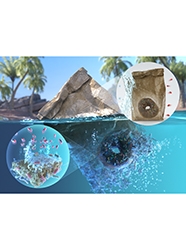
The team’s work, titled “Gram-per-litre scale production of lutein by engineered Corynebacterium,” was published in Nature Synthesis and selected as the cover article for the October 2025 issue (Figure 1).
Figure 1. Schematic illustration of microbial production of lutein (Eun and Prabowo et al., Nature Synthesis, 2025)
This research details a high-level production of lutein using glucose as a renewable carbon source via systems metabolic engineering (Figure 2). The team focused on eliminating metabolic bottlenecks that previously limited microbial lutein synthesis. By employing enzyme scaffold-based electron channeling strategies, the researchers improved metabolic flux towards lutein biosynthesis while minimizing unwanted byproducts.
Figure 2. Development of engineering strategies applied to construct lutein-producing strain (Eun and Prabowo et al., Nature Synthesis, 2025)
To enhance productivity, bottleneck enzymes within the metabolic pathway were identified and optimized. It was determined that electron-requiring cytochrome P450 enzymes played a major role in limiting lutein biosynthesis. To overcome this limitation, an electron channeling strategy was implemented, where engineered cytochrome P450 enzymes and their reductase partners were spatially organized on synthetic scaffolds, allowing more efficient electron transfer and significantly increasing lutein production.
The engineered C. glutamicum strain was further optimized in fed-batch fermentation, achieving a record-breaking 1.78 g/L of lutein production within 54 hours, with a content of 19.51 mg/gDCW and a productivity of 32.88 mg/L/h—the highest lutein production performance in any host reported to date. This milestone demonstrates the feasibility of replacing plant-based lutein extraction with microbial fermentation technology.
It is anticipated that this microbial cell factory-based mass production of lutein will be able to replace the current plant extraction-based process. As maintaining good health in an aging society becomes increasingly important, the technology and strategies developed here will play pivotal roles in producing other medically and nutritionally significant natural products.
Read more